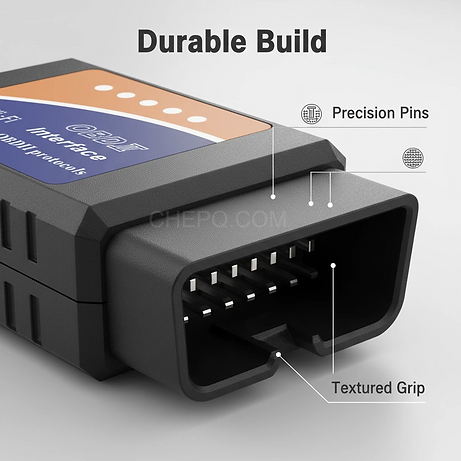
Launching our extensive overview involving Car Diagnostic together with Digital Tire Monitoring signal frequencies through Europe region, Oriental regions, and North American region.
Various established Auto Diagnostic platform combined with Wheel Sensor System radio bands present diverse variation across market-based laws. In United States fields, pressure detection modules primarily operate on the three fifteen megahertz. On the other hand, some of cars would work via signal frequency at 433 MHz. Meanwhile, the EU's wheel pressure monitoring mostly handle 433 MHz telemetry. Some older models function using three-one-five megahertz. Within the scope of Asian-Pacific zones, particularly Chūgoku, Japan, and Korea, tire pressure monitoring systems show an extensive variety of signals, consisting of variable frequency 315 MHz, unlicensed spectrum band, and variant uncommon ranges employed through various brands and classes. Those considerable range calls for customized diagnostic tools and abilities for valid maintenance in universal vehicle fleets.
Knowing Tire Safety Devices Operating Bands inside the European Union, NAFTA Region & Across Continents
Tire Safety Monitoring work using radio wavebands, and these alter considerably depending on the geographic zone. European Union predominantly applies 433.92 MHz, abiding by strict governmental guidelines. United States and Canada, however, chiefly operates at 315 MHz, a important difference influencing aftermarket instruments functionality. Planet-wide, areas present even more diverse telemetry bands. For illustration, Australia habitually works both 315 MHz and 433.92 MHz, complicating diagnostics. Grasping these jurisdictional nuances is necessary for repair specialists including anyone involved with wheel pressure systems.
- Frequency over Europe: 433.92 MHz
- Band in American continent: 315 MHz
- Australia sometimes runs on both frequencies
Electric Transport Scanners: Automotive Diagnostic System Adaptation & Tire Sensor Technology Examination:
While electric automobiles become growing more common, the call state-of-the-art diagnostic tools is expanding. Several EV diagnostic systems boast standard allowing access to specialists to retrieve important vehicle information. Moreover, up-to-date EV evaluation machines offer tire monitoring assessment tools with} for dependable diagnosis of faulty sensors and possible wheel-circumference pressure malfunctions. The said capabilities extensively lessen repair duration and boost total vehicle function.
- Examine Electronic Vehicle Diagnostic Trouble Reports:
- Recognize TPMS System Errors:
- View Current Automobile Information:
Spotlight on TPMS Frequency Usage in Europe and the US
Understanding TPMS sensor frequencies usually intricate, primarily relating to assessing configurations among European markets compared to the continent. Previously, North America primarily utilized 433 MHz telemetry band, nonetheless the European Union switched to another frequency of standard 315 MHz range. Albeit, fresh mandates and enhancing transport unit engineering are generating heightened deployment of diverse radio bands in the countries.
OBD2 Scan Tools for Electric Autos: Scanning Tire Pressure Monitoring System Around the World
This emergence of battery vehicles has grown the role of vehicle readers beyond traditional ICE diagnostics. That key attribute now available is the tool to obtain TPMS parameters, a important feature of vehicle security, across widespread locations. Historically, retrieving this input often necessitated tailored tools. Nonetheless, state-of-the-art vehicle scanners, notably those produced for battery vehicles, are continuously supplying adaptability and the capability to interpret pressure monitoring inputs, despite the auto's manufacture on each global region. This permits experts and even vehicle proprietors to resolve tire pressure related issues reliably – strengthening automobile operation and cutting potential dangers.
Regional TPMS Frequency Variations: Insights for the US, Europe, and Asia
Rubber Pressure Detection Systems communicate on differing bands globally, creating issues for mechanical repair technicians and car owners. In the USA region, most TPMS sensors utilize the 315 MHz band, while the EU predominantly employs 433.92 MHz. Far Eastern countries exhibit a more extensive variation, including 315 MHz in Japanese territories, and 433.4 MHz in Korean states. This variation spectrum necessitates specialized tools and a complete understanding of regional TPMS regulations to avoid faulty programming and ensure reliable sensor workability.
US, Europe, Asia: Your Automotive and Wheel Pressure Signal Quick Guide
Mastering the complicated world of automotive and tire sensor wavelengths across different zones can be difficult. Here’s a concise overview to help you grasp which transmissions you’re dealing with. Don’t forget that these are baseline guidelines, and revisions may exist. Please diligently seek your ride’s user guide for correct information.
- The European Union: Primarily utilizes 315 MHz for pressure detection and engine diagnostic systems generally adhere to universal standards supporting various procedures.
- Asia-Pacific: A mix of wavelengths is ordinary. Wheel Pressure Monitoring Systems can operate on 315 MHz frequency or 433 telemetry band, and automotive diagnostic standards may differ by jurisdiction.
- U.S.A.: Wheel Pressure Monitoring predominantly uses 315 MHz, while automotive diagnostic frameworks typically operate on Controller Area Network bus modalities.
Worldwide EV Tire Pressure Monitoring Frequency Breakdown
The expansion related to battery-powered transport units has brought OBD2 significant highlight to Tire Pressure Monitoring Systems (TPMS). Unlike their fossil-fueled counterparts, EVs often incorporate intricate TPMS modules requiring specific comprehension concerning sensor broadcasts globally. At present, TPMS sensors communicate on various frequencies depending regional regulations. For scenario, North America predominately uses 315 MHz, though Europe, Asia, and the land down under largely employ 433.92 MHz. Nevertheless, select countries, like Russia and Japan, use different, less usual frequencies, creating the obstacle for technical servicing or aftermarket TPMS apparatus adaptability.
- The signal chosen shall align with the area's regulations.
- Effective sensor locating is essential for best output.
